eSIM vs Pocket WiFi in Japan: Which Saves More in 2026?
Pocket WiFi rental or an eSIM for Japan? We ran the real 2026 numbers for a two week trip and one option wins by a wide margin for most travelers.
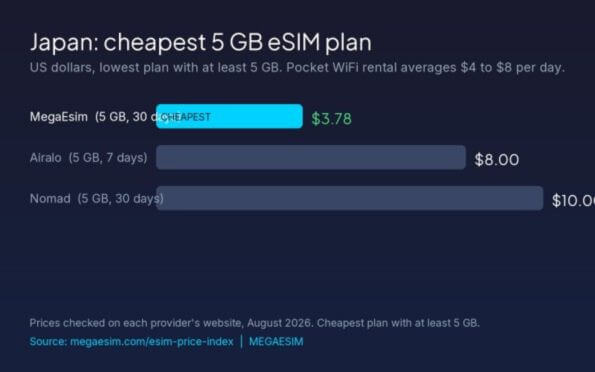
Short answer: For most Japan trips in 2026, an eSIM wins on cost by a wide margin. An eSIM for Japan with 5 GB costs $3.78 for a whole month, while pocket WiFi rental runs $4 to $8 per day plus pickup, charging and a deposit. Pocket WiFi still makes sense for groups of three or more sharing one connection, or for older phones without eSIM support.
Pocket WiFi was the default answer for Japan for a decade, and the airport counters at Narita and Haneda still do steady business. But the math changed. Phone plans did not get cheaper, rental prices did not fall much, and meanwhile eSIM prices collapsed. We checked current prices from the major eSIM providers and the big rental services to see where the crossover sits in 2026.
Also read: Budget Travel Mistakes That Can Cost You More Than Money
The numbers for a 14 day Japan trip
| Option | Typical cost, 14 days | What you get |
| MegaEsim eSIM, 5 GB | $3.78 | instant QR by email, no hardware |
| MegaEsim eSIM, 10 GB | $6.58 | for heavier use |
| Airalo eSIM, 5 GB | $8.00 (7 day validity, so buy twice: $16.00) | app based |
| Nomad eSIM, 5 GB | $10.00 | 30 day validity |
| Holafly eSIM, unlimited | from $3.90 per day, about $55 for 14 days | unlimited with daily fair use |
| Pocket WiFi rental | $56 to $112 plus deposit | one shared battery powered hotspot |
All prices were checked on each provider’s public website in August 2026 and are in US dollars. Prices change, so treat them as a snapshot and check before you buy. Pocket WiFi pricing reflects the advertised daily rates of the major Japan rental services.
Where pocket WiFi still wins
Fairness matters in a comparison, so here is the honest case for the rental. A family of four sharing one pocket WiFi pays one rental fee instead of four plans, and for heavy shared use that can come out ahead of four unlimited eSIMs. Travelers with older phones that lack eSIM support have no choice. And a hotspot can feed a laptop all day without draining a phone battery.
The costs beyond money are where the rental loses. You collect the device at a counter after a long flight, you charge one more gadget every night, you share one battery among everyone, the whole group loses internet when it dies at 4 pm in Shibuya, and on the last morning you post it back or queue at the airport again. The eSIM has none of those steps. It arrives by email before the trip, works the moment the plane door opens, and there is nothing to return.
What actually matters for Japan
Japan is a data hungry destination. Between Google Maps in Tokyo station, train apps, translation and payment apps, most visitors use more data than they expect, and there is very little free WiFi outside hotels and convenience stores. For two weeks, 5 GB is a sensible floor for light users, 10 GB is comfortable, and streamers should look at daily unlimited options. Whichever provider you pick, install before you fly and switch data roaming on for the travel line after landing.
Rental listings advertise the daily rate, but the real pocket WiFi bill includes more lines. Insurance against loss or damage adds a dollar or two per day. Airport pickup is free but the queue is not, and express shipping to a hotel costs extra. Losing the device costs a replacement fee that can exceed $200. None of these exist with an eSIM, where the worst case is rebuying a plan that cost less than lunch.
For couples the comparison tightens, since one rental serves two phones. Even then, two separate 10 GB eSIMs cost about $13 combined for a month, which still undercuts a fortnight of rental at the advertised rates before insurance.
Which provider fits which Japan traveler
MegaEsim has the lowest verified prices at every size we checked and monthly validity as standard, which suits the classic two or three week Japan route. Airalo’s shorter validities fit weekend business trips. Nomad prices land in the middle with solid 30 day windows. Holafly’s daily unlimited makes sense for creators uploading video every evening, where its per day cost buys genuine freedom from the meter.
Setting up before you fly
Buy the plan, scan the QR from the confirmation email over home WiFi, and confirm the new line appears in settings. Label it Japan so it is obvious later. On landing, enable the line and its data roaming, keep your US line active for texts but switch its data off, and you will have signal before the seatbelt sign turns off. Total setup time is genuinely under five minutes, most of which is finding the settings menu.
Frequently asked questions
Does an eSIM work on the Shinkansen and in the metro?
Yes. Travel eSIMs use the main Japanese networks, which cover the Shinkansen lines and underground platforms remarkably well. Expect brief drops in long rural tunnels, the same as any local phone.
Can I keep my US number for texts and calls?
Yes. The eSIM handles data only, and your regular SIM stays active for calls, texts and bank verification codes. Just disable data on your home line so you do not pay roaming rates by accident.
How do prices for Japan compare with other countries?
Japan sits in the cheaper half of the world for travel data in 2026. The eSIM Price Index tracks live prices across 189 countries if you want to see how your next destination compares before you budget for it.