
Where to Base Yourself in Costa Rica for Wildlife, Beaches, and Easy Day Trips
Want to know where to base yourself in Costa Rica? It depends on what you want to see and do. We break it down to make the decision easy.
Costa Rica is one of the most beautiful and diverse countries in the Americas. Within just a few hours of driving, you can journey from mist-shrouded cloud forests to sun-drenched Pacific beaches, active volcano peaks, and dense tropical rainforests humming with wildlife.
However, one of the most common surprises for first-time visitors is that, despite Costa Rica’s relatively small footprint, travel times can be considerably longer than expected. Winding mountain roads, unpaved coastal routes, and river crossings mean that covering short distances on a map can easily turn into an all-day journey.
Picking the right base makes all the difference between spending your Costa Rica vacation relaxing and exploring, versus spending it behind the wheel. Here is a practical travel guide to help you decide where to stay in Costa Rica for the ultimate adventure.
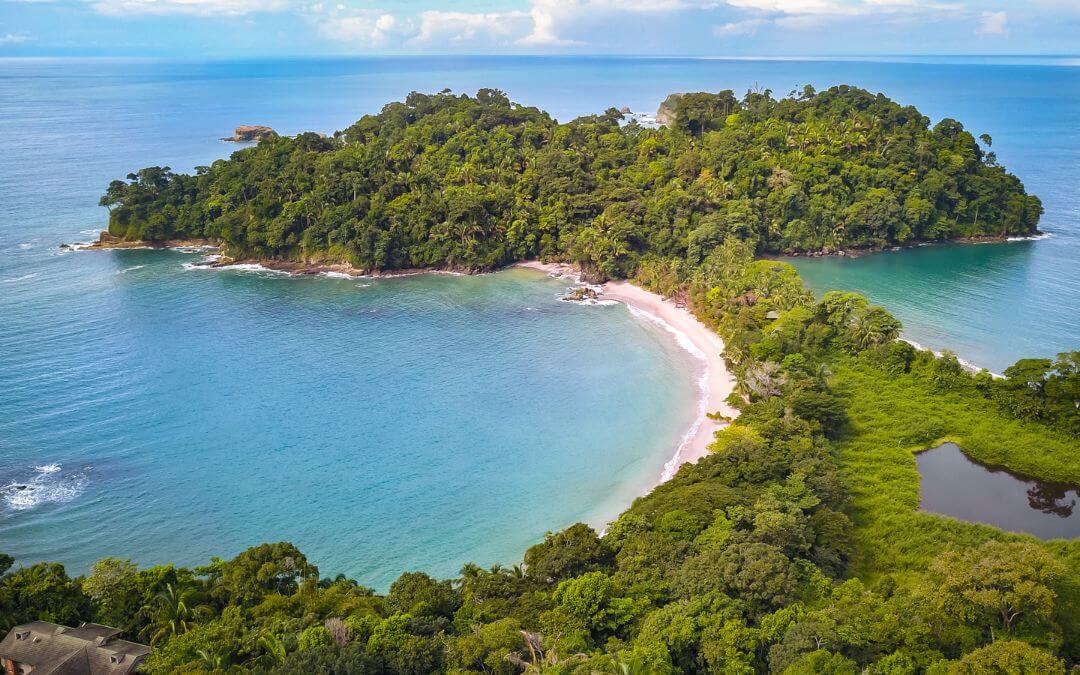
Manuel Antonio for Wildlife and Beaches Combined
If you want lush rainforest full of wildlife right alongside pristine, calm ocean beaches, Manuel Antonio on the Central Pacific coast is hard to beat.
This regions is home to Manuel Antonio National Park, one of the nation’s most famous protected areas. It offers an incredible density of flora and fauna. Within minutes of stepping onto the park trails, visitors frequently encounter capuchin monkeys, howler monkeys, three-toed sloths, iguanas, and vibrant tropical birds.
Beyond the national park itself, Manuel Antonio serves as a fantastic springboard for easy day trips. You can take a morning kayak tour through the mangrove estuaries of Isla Damas. You can set sail on a sunset catamaran cruise to spot dolphins. Or, head inland for ziplining and white-water rafting on the Savegre River.
For nature-lovers and wildlife enthusiasts who still want a couple of days relaxing on the beach, it makes sense to choose a vacation rental in Manuel Antonio. The town offers a wide range of accommodations, from eco-lodges tucked into the jungle canopy to spacious coastal homes with ocean views.
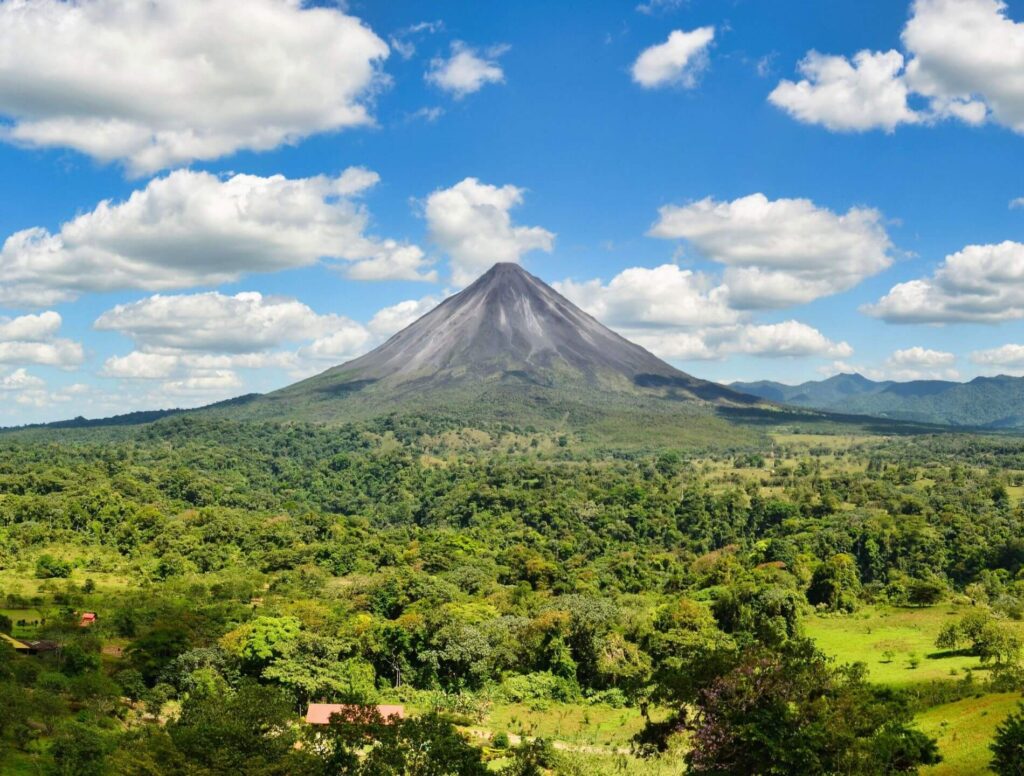
La Fortuna & Arenal for Volcanoes, Thermal Springs, and Adventure
Situated in the Northern Highlands beneath the iconic silhouette of Arenal Volcano, La Fortuna is widely considered the adventure capital of Costa Rica. If your dream itinerary involves volcanic landscapes, roaring waterfalls, natural hot springs, and high-adrenaline outdoor activities, this is the ideal place to set up camp.
From La Fortuna, seamless day trips abound. You can hike the lava trails of Arenal Volcano National Park. You can cross hanging bridges through the rainforest canopy at Mistico Park. Or, descend the 530 steps to the stunning La Fortuna Waterfall basin.
For a full-day excursion, head north to the mystical Rio Celeste in Tenorio Volcano National Park. It is famous for its electric-blue river waters. After a busy day of trekking, you can unwind in one of the region’s many natural geothermal hot springs. They are fed by the volcano’s underground heat.
Tamarindo & The Guanacaste Coast for Sunshine, Surf, and Coastal Exploration
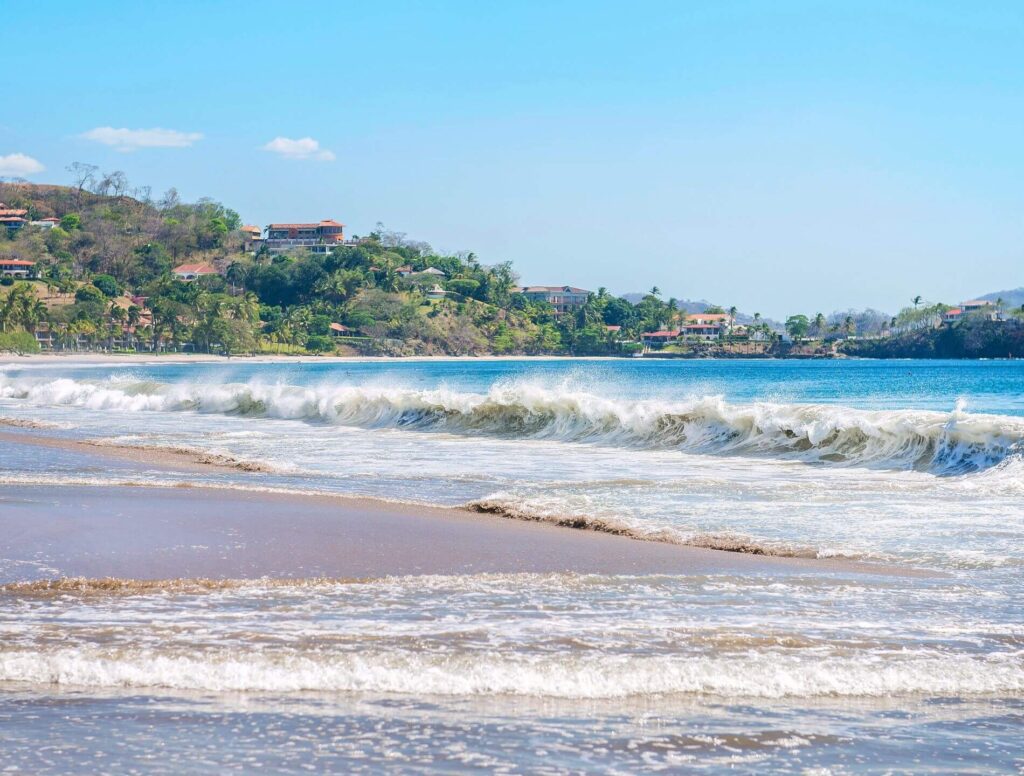
For travelers prioritizing sunshine, warm ocean waters, and a lively beach community, the Guanacaste province on the North Pacific coast is a prime choice.
Tamarindo is the bustling hub of this area, renowned for its consistent surf breaks, lively restaurant scene, and spectacular sunsets. It is particularly great for families, solo travelers, and first-time surfers looking for accessible beach amenities.
Base yourself in or near Tamarindo, and you will have dozens of incredible beaches within a 30- to 60-minute drive. Head north to Playa Conchal. It is famous for its shore composed entirely of crushed seashells, or venture south to Playa Avellanas for world-class surfing.
Marine life enthusiasts can arrange day trips to Marino Las Baulas National Marine Park to learn about sea turtle conservation. If you want to explore underwater, embark on scuba diving excursions to the nearby Islas Santa Catalina. There, you can swim alongside giant manta rays and reef sharks.
Monteverde for High-Altitude Cloud Forests and Biodiversity
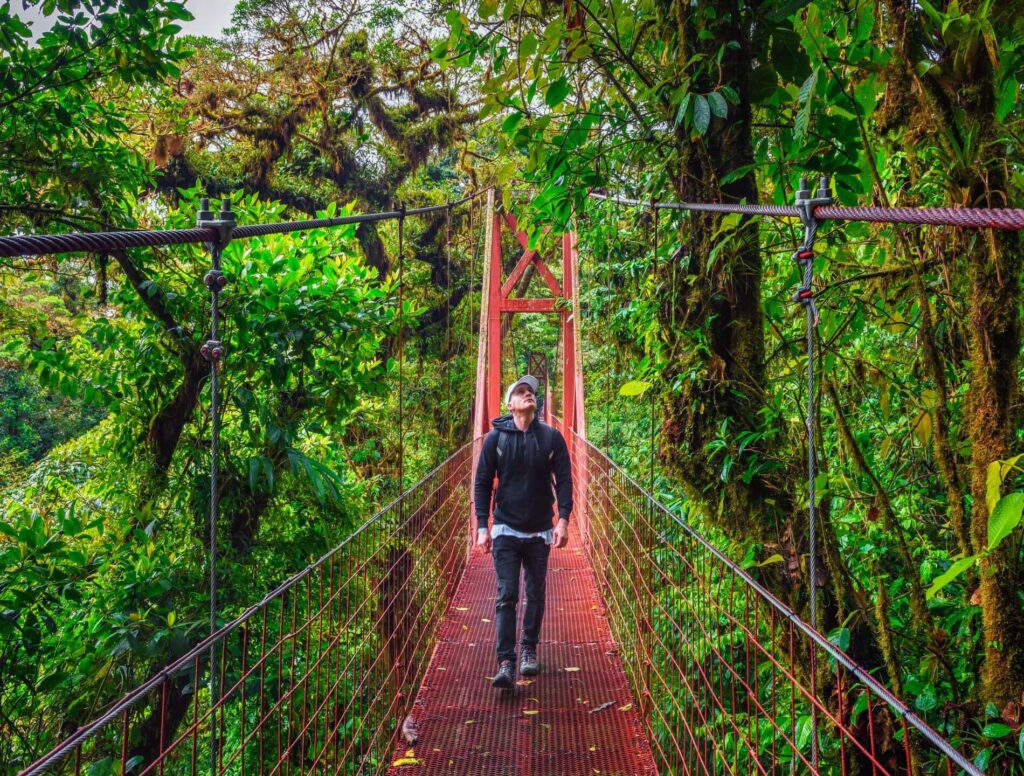
Perched high along the Continental Divide, Monteverde offers a complete change of climate and scenery from the tropical coastlines.
The region is famous for its rare cloud forest ecosystem. Here, a gentle mist feeds an extraordinary abundance of plant and animal life. It is an essential stop for birdwatchers, botanical enthusiasts, and anyone wishing to see incredible tropical birds. One example is the elusive resplendent quetzal, which can be spotted between January and May.
Staying in the central village of Santa Elena gives you effortless access to both the Monteverde Cloud Forest Reserve and the Santa Elena Reserve. Activities here focus heavily on nature. You can take canopy zipline tours, stroll through orchid gardens, join guided night walks to discover nocturnal wildlife, and visit local coffee and chocolate plantations.
Monteverde sits at a high elevation, which means temperatures are refreshingly cool. This makes it a great middle destination to break up visits to hotter coastal areas.
Drake Bay & Osa Peninsula for Remote Wilderness and Untamed Nature
If your goal is to get off the beaten path and experience raw, untouched biodiversity, head south to Drake Bay on the Osa Peninsula.
National Geographic has described the Osa Peninsula as “one of the most biologically intense places on Earth.” 2.5% of the Earth’s biodiversity can be found here in an area that comprises just 0.001% of the planet’s surface.
Drake Bay serves as the gateway village for exploring Corcovado National Park. It is home to tapirs, jaguars, scarlet macaws, and four native monkey species. It’s a long trek to get here and not accessible by car unless you’re in a 4×4 or other high-clearance vehicle and feel confident navigating unpaved roads that cross streams and rivers. Once you arrive, you can expect unmatched nature experiences.
Key day trips include guided boat journeys into Corcovado’s Sirena Ranger Station, as well as snorkeling or diving trips to Caño Island Biological Reserve, where crystal-clear waters host sea turtles, rays, and seasonal humpback whales.
Tips for Structuring Your Costa Rica Itinerary
To make the most of your time in Costa Rica without feeling rushed, keep these practical planning strategies in mind.
1. Limit Your Bases
For a 7-to-10-day trip, pick no more than two main bases (for example, Arenal and Manuel Antonio). For a two-week trip, three bases allow a balanced pace.
2. Double Expected Drive Times
Google Maps and other travel apps are notoriously bad at giving accurate driving times in Costa Rica. Always double estimates, especially during the rainy season (May through November) when road conditions can slow travel.
3. Mix ecosystem types
Costa Rica’s diversity is a huge part of its appeal. Pair a highland destination like La Fortuna or Monteverde with a coastal spot like Guanacaste or Manuel Antonio to sample Costa Rica’s distinct microclimates.
Enjoy Your Costa Rica Escape
Whatever your main priority — spotting sloths and toucans, relaxing on palm-fringed beaches, catching world-class surf, or seeking out cascading waterfalls — it pays to choose a central base tailored to your travel plans.
By choosing the right hub based on your travel preferences, you can spend less time navigating mountain transit and more time soaking in Costa Rica’s incredible wildlife, warm beaches, and vibrant culture.


