
How to Balance Travel and Studying Effectively
Learn how to balance travel and studying with practical tips, smart time management, and real strategies for students on the move.
There’s a quiet lie many students believe before their first trip abroad: that studying and traveling will naturally fall into place. That somehow, between airport transfers and late night walks in unfamiliar cities, there will be a perfect pocket of time where focus appears on command.
It rarely works that way.
In reality, balancing travel and studying is less about discipline and more about negotiation. Negotiation with time, energy, and expectations. The students who manage it well don’t just try harder. They think differently about what studying even means when life is in motion.
Also read: What Is the Best eSIM for International Travel in 2026?
The Reality No One Mentions
A student enrolled in an online course from Harvard University once described studying in three countries over two months. On paper, it sounded impressive. In practice, it meant watching lectures on unstable Wi Fi in hostels and rewriting notes on trains that never quite ran on schedule.
The takeaway wasn’t about productivity hacks. It was simpler:
Travel disrupts routine and studying depends on it.
So the real question becomes how to build a flexible structure that survives disruption.
Rethinking Productivity on the Move
Most advice around how to study effectively while traveling assumes students can recreate their home environment. That rarely happens. Instead, successful students shift toward micro productivity.
They stop chasing long sessions and start working in fragments:
- 20 minutes reviewing notes at a café
- 15 minutes summarizing a lecture while waiting
- 30 minutes of focused writing early in the morning
It doesn’t feel impressive in the moment. Over a week, it becomes real progress.
There’s also a mental adjustment. Travel creates sensory overload. New languages, unfamiliar systems, constant decisions. Cognitive fatigue is real. Expecting peak academic performance every day is unrealistic.
The Hidden Trade Offs
Balancing travel and studying is not about doing everything. It is about choosing what to miss.
Some students search for do my homework for money KingEssays when deadlines collide with intense travel periods. It reflects a broader truth:
When time is limited, priorities become sharper.
Students who manage both worlds do not pretend they can do everything. They decide what matters most in each moment and accept the trade off.
And if tutoring is needed, Brighterly learning platform is a good option. They offer 1:1 tutors and smart practice tools.
Time Management That Actually Works
Traditional time management advice often fails during travel. A rigid schedule collapses quickly.
A more realistic system looks like this:
| Situation | Strategy | Why It Works |
| Long transit | Passive learning such as reading or reviewing | Low energy needed |
| Arrival day | No study planned | Mental load is already high |
| Stable stay | Deep work sessions | Temporary routine becomes possible |
| Early mornings | High focus tasks | Fewer distractions |
| Evenings | Light tasks or rest | Prevents burnout |
This is what time management for students who travel actually looks like. Adaptive and flexible.
The Myth of Free Time
Travel creates the illusion of freedom, but it quietly fills time. Booking, navigating, even finding food takes attention.
Students who manage to balance travel and studying do something different. They schedule study first, then let travel fill the rest.
It feels restrictive at first. It also works.
There is also a psychological shift happening here. When study time becomes intentional instead of accidental, students stop feeling guilty about either activity. They are no longer “supposed to be studying” while exploring a new city. They already did their work. That clarity removes a surprising amount of stress.
Environment Matters More Than Motivation
Trying to study in a noisy hostel is a losing game. Motivation will not fix that.
Experienced students pay attention to environment:
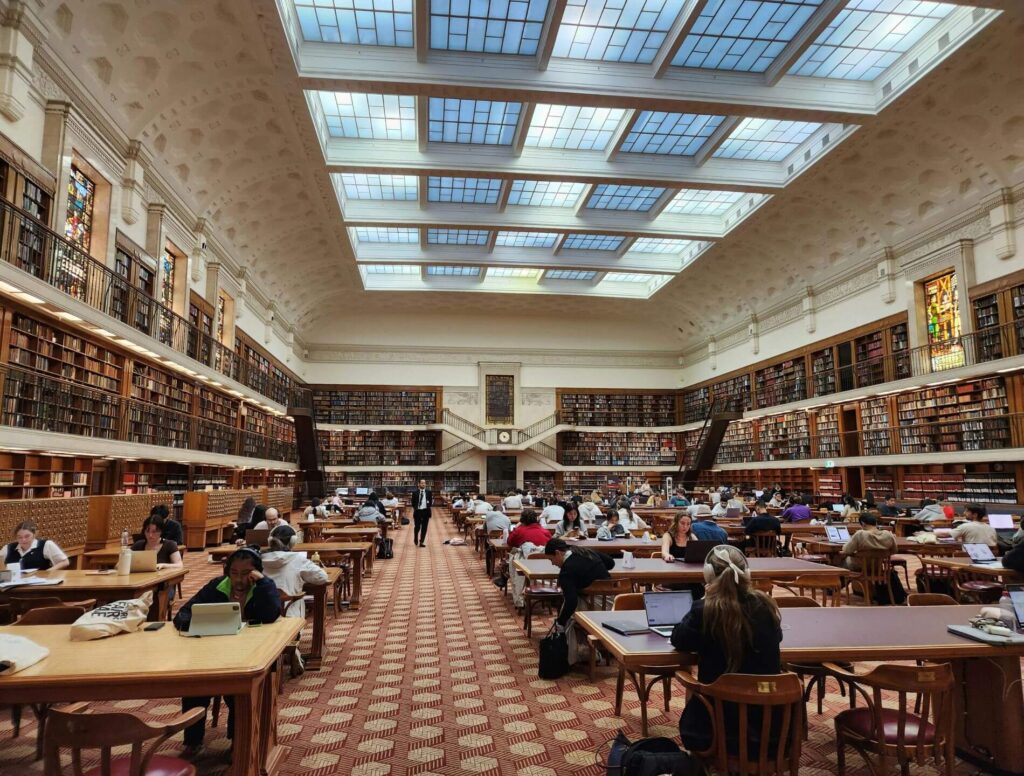
- Libraries in local universities
- Cafés during quiet hours
- Co working spaces
Cities such as Lisbon and Barcelona have strong remote work cultures. Students who use these spaces find it easier to stay consistent.
There is also a subtle benefit to changing environments. Some students report that studying in new places actually improves memory retention. The brain tends to associate information with context, and unusual surroundings can make certain topics more memorable. It is not a guaranteed effect, but it appears often enough to be noticeable.
Energy Is the Real Currency
Time is not the biggest constraint. Energy is.
Travel drains energy in subtle ways. Movement, decisions, new environments. Studying requires a different type of focus.
Patterns start to appear:
- After travel heavy days, focus drops
- After rest, focus improves
Students who adapt to this move forward steadily. Those who ignore it get stuck.
There is also a long term effect. Students who learn to manage energy instead of just time tend to avoid burnout more effectively. They become more aware of their limits and adjust before exhaustion becomes a problem.
What Experienced Students Do Differently
Students who successfully combine travel and academics share similar habits.
They tend to:
- Plan assignments ahead of trips
- Communicate early with professors
- Keep materials simple and accessible
- Accept imperfect study sessions
There is also a mindset shift. They stop chasing perfect study days and start valuing consistency.
A Different Kind of Discipline
Discipline here looks different.
Discipline is reviewing notes for 15 minutes instead of scrolling.
It is waking up earlier in a new city to create space.
It is also knowing when to stop and actually experience the place.
This balance is never fixed. It keeps shifting.

Study While Traveling Tips That Actually Work
These are practical student travel productivity tips that work in real conditions:
- Download materials for offline access
- Use one main device to avoid friction
- Set small daily goals
- Avoid over scheduling
- Track progress weekly instead of daily
Simple strategies, but reliable.
What This Experience Teaches
Some students notice something unexpected over time.
They become better at focusing.
Not because conditions are ideal, but because they learn to work in imperfect ones. That skill has value beyond studying.
Organizations such as the World Economic Forum often highlight adaptability as a key future skill. Being able to stay productive in unstable environments is becoming essential.
A More Honest Perspective
Balancing travel and studying is not a perfect system.
Some weeks studying takes priority. Other weeks travel wins. The goal is not balance in a strict sense. It is movement in both directions without stopping completely.
Students who succeed do not romanticize the process. They adjust constantly. They fall behind sometimes. Then they catch up.
Somewhere between early mornings, missed plans, and unfamiliar places, they develop something more valuable than any method: the ability to keep going even when conditions are not ideal.