
What Out-of-State Motorcyclists Should Know About Florida No-Fault Insurance
Florida No-Fault Insurance: What to know if you are visiting from out of state and plan to ride a motorcycle.
Riding into Florida is the easy part. Figuring out which policy might actually pay after a motorcycle crash is harder, because Florida’s no-fault insurance system rules treat motorcycles differently from covered four-wheeled vehicles.
Crossing a state line does not rewrite your policy. But a crash on a Florida highway can reveal gaps in your understanding of personal injury protection, passenger coverage, and which hospitals your health plan recognizes. The worst time to test those assumptions is from a hospital bed. This guide lays out the rules in plain language and gives you questions to ask your insurer before your trip.
Crossing a state line does not guarantee that every coverage follows you or the motorcycle.
Florida No-Fault Insurance Works Differently for Motorcycles
Does Florida PIP automatically cover a visiting motorcyclist?
No, it does not. Florida’s mandatory personal injury protection, called PIP, applies to vehicles that meet the no-fault statute’s definition of a motor vehicle. Under Florida Statutes § 627.732, that definition generally covers self-propelled vehicles with four or more wheels. A motorcycle does not meet it.
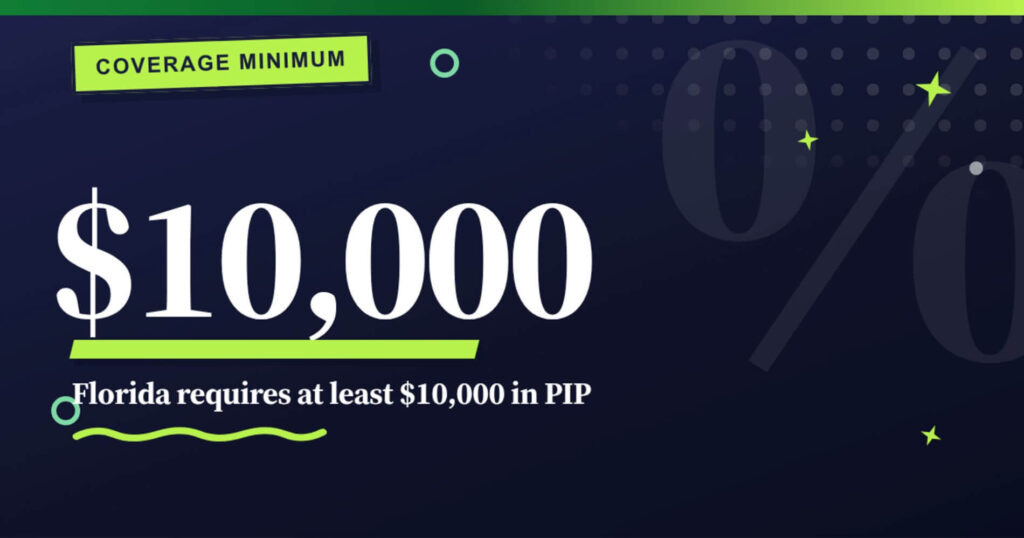
For qualifying registered vehicles, Florida’s insurance requirements call for at least $10,000 in PIP and $10,000 in property damage liability coverage. Motorcycle riders sit outside that automatic PIP framework. A visitor on two wheels should not assume Florida PIP will pay medical bills for injuries sustained while riding a motorcycle.
Your home-state policy is a separate question. It may provide coverage beyond Florida’s minimum framework, and only your insurer can confirm whether that coverage follows you or the motorcycle into Florida.
How much does Florida no-fault insurance pay?
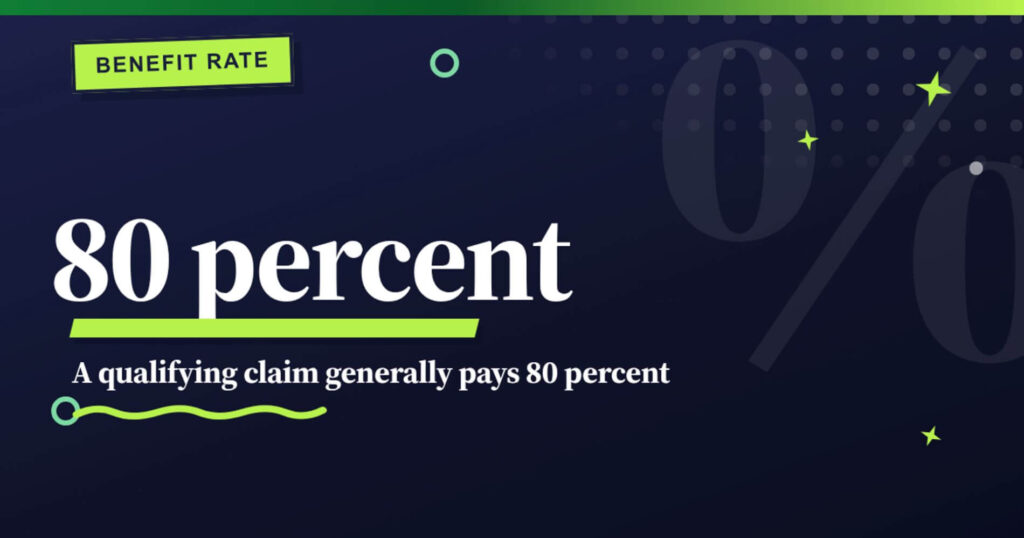
These figures describe qualifying PIP claims involving covered motor vehicles, not injuries sustained while occupying a motorcycle. Under Florida Statutes § 627.736, a qualifying claim generally pays 80 percent of reasonable medical costs and 60 percent of lost income, subject to the $10,000 statutory limit. Medical benefits may be capped at $2,500 unless the statute establishes an emergency medical condition.
Those benefits do not automatically reach someone injured while riding a motorcycle. The figures show what occupants of covered four-wheeled vehicles may receive and highlight the gap riders must close through other coverage before the trip.
Compare PIP With Coverage That May Help After a Motorcycle Crash
Five potential sources of payment commonly arise after a Florida motorcycle crash. Whether any apply depends on the wording of each policy.
| Coverage | Basic trigger | What it may pay | Main issue for a visiting rider |
| PIP | A qualifying loss under an applicable no-fault auto policy | A statutory share of covered medical costs and lost income | Florida generally excludes motorcycles from its automatic PIP framework |
| Bodily injury liability | Another person is legally responsible for the crash | The injured person’s covered damages, up to available limits | Payment normally turns on fault, coverage, and proof of the claim |
| Uninsured or underinsured motorist coverage | A legally responsible driver has no liability insurance or insufficient limits | Covered losses under the injured person’s applicable policy | The rider must confirm that UM or UIM applies to the motorcycle and trip |
| MedPay | A covered person incurs eligible medical expenses after a covered event | Medical bills up to the policy limit | It is optional, and policy definitions vary |
| Health insurance | The rider or passenger receives covered medical care | Eligible treatment under the health plan | Networks, deductibles, referrals, and reimbursement rights may affect the bill |
PIP and bodily injury liability do separate jobs
PIP is designed to pay qualifying benefits without first proving that another driver caused the crash. Bodily injury liability works the other way. It covers qualifying claims brought against an insured person whose negligence injured someone else, so payment turns on fault, available limits, policy terms, and proof of the claim.
The exclusion that catches most visiting riders off guard is written into the statute itself. Florida’s no-fault insurance system leaves motorcyclists outside the automatic PIP benefits that come with covered four-wheeled vehicles, and policies pick up the slack.
UM, UIM, and MedPay turn on policy language
Uninsured motorist coverage, or UM, addresses covered losses caused by a driver without applicable liability insurance. Underinsured motorist coverage (UIM) covers losses that exceed the at-fault driver’s available limits. Medical payments coverage, called MedPay, is optional medical-expense coverage governed by its policy terms.
A declarations page may show a coverage name and dollar limit without explaining whether the coverage extends to a passenger, a borrowed motorcycle, or an out-of-state trip. Review the endorsements and exclusions, and ask your agent how the policy applies. Rules governing Florida-issued policies may not control a policy issued in your home state.
Health insurance may pay first, but network rules still matter
When PIP does not apply, health insurance may become the immediate source of payment for an injured rider. Deductibles, coinsurance, network restrictions, and authorization requirements can still shape the final bill.
Emergency treatment and follow-up care raise separate issues. A rider might get care at a Florida emergency department and later discover that physical therapy, imaging, or a specialist visit requires an in-network provider or prior authorization. Ask both insurers before leaving home.
Three Florida Crash Scenarios to Test Before Leaving Home
Policy language gets clearer when you apply it to realistic situations. Consider how your coverage would respond to each scenario below.
None of these outcomes is guaranteed.
An uninsured driver hits your motorcycle
The other driver’s lack of coverage does not make Florida PIP available to you. A rider in this position may need to examine applicable UM coverage and optional MedPay, along with personal health insurance and any claim against the responsible driver.
UM payment usually requires showing that the uninsured driver was legally responsible and that the loss falls within the policy. Check whether the motorcycle is listed, whether exclusions apply, and whether the coverage follows the named insured onto another motorcycle. Those details live in the policy and endorsement pages, not on the insurance card in your wallet.
A passenger is hurt on a borrowed motorcycle
Permission to use the motorcycle does not guarantee coverage. Potential sources may include the owner’s liability policy, coverage available to the operator, applicable MedPay, the passenger’s health plan, or UM coverage if an uninsured driver caused the crash.
Ask whether the operator had permission, whether the policy covers passengers, and whether the rider is listed as an excluded operator. You should also pin down whether UM or MedPay follows the person, the motorcycle, or both. Treat no source of payment as settled until the applicable policy language confirms it.
Your health plan restricts out-of-network care
Think about the timeline. Emergency treatment happens near the crash, while follow-up care may continue during the trip or after you return home. Network restrictions and authorization requirements often matter more in that second phase.
Keep every itemized bill, explanation-of-benefits document, and written coverage decision. Before departure, save the emergency-services telephone number printed on your member card and ask how the plan handles emergency and follow-up care outside your home network.
What to Ask Your Insurer Before Riding Into Florida
A brief call beats an afternoon of guessing. Review these questions with your motorcycle insurer and health plan, and write down their answers.
- Does my motorcycle policy remain in force throughout Florida?
- Does my policy include uninsured and underinsured motorist coverage for this motorcycle?
- Are those limits stacked or non-stacked, if that distinction applies to my policy?
- Do I have motorcycle MedPay, and who qualifies as an insured person?
- Is a passenger covered for injuries?
- May another licensed rider operate my motorcycle?
- Am I covered while riding a borrowed or rented motorcycle?
- Do any exclusions apply when I cross state lines?
- Which Florida hospitals are in my health plan’s network?
- What must I do if emergency care is followed by out-of-network treatment?
- Which telephone number should I call after a crash?
- Can the insurer send the answers and relevant endorsements in writing?
Keep the documents within reach. Store your declarations page, insurance card, health-plan card, and roadside-assistance number somewhere you can access without unpacking the motorcycle at the side of the road.
Common Florida Insurance Questions for Visiting Riders
How long does a Florida no-fault crash remain on your record?
“No-fault” describes a benefit system, not a record-retention category. The same crash can appear in a motor vehicle record, an insurer’s internal claim history, and a consumer insurance report. Each system may retain information for a different period. Ask which record your insurer uses and how to dispute an inaccurate entry.
What should you not say to an insurance adjuster?
Report accurate facts and follow your policy’s requirements. Do not guess about speed, accept blame before the facts are established, minimize an injury whose extent remains unclear, or exaggerate a loss. Give timely notice of the crash and follow your policy’s reporting requirements.
Does an out-of-state motorcycle policy change at the Florida border?
Crossing the state line generally does not rewrite the insurance contract. However, many policies contain provisions addressing travel in other states, and the wording varies. Ask whether your policy adjusts to another state’s minimum requirements, and whether that provision affects only liability coverage or also first-party coverage such as MedPay.
Who handles the first medical bills after a Florida motorcycle crash?
There is no universal payer. It depends on whether MedPay applies, whether health insurance accepts the claim, whether another driver is liable, and whether UM or UIM coverage applies for the trip.
Liability and UM claims take time because you must evaluate fault, coverage, and damages. A hospital bill may arrive before those claims resolve, so early contact with both the health plan and motorcycle insurer matters.
Final Thoughts on Florida Insurance for Out-of-State Motorcyclists
Florida no-fault insurance does not give motorcycle travelers the automatic PIP protection that comes with covered four-wheeled vehicles. A policy review before the trip can reveal whether you have applicable MedPay, UM, or UIM coverage, passenger protection, and workable health-care access in Florida. Get your insurers’ written responses, then file the declarations page and endorsements with your travel documents before you leave.